Abstract
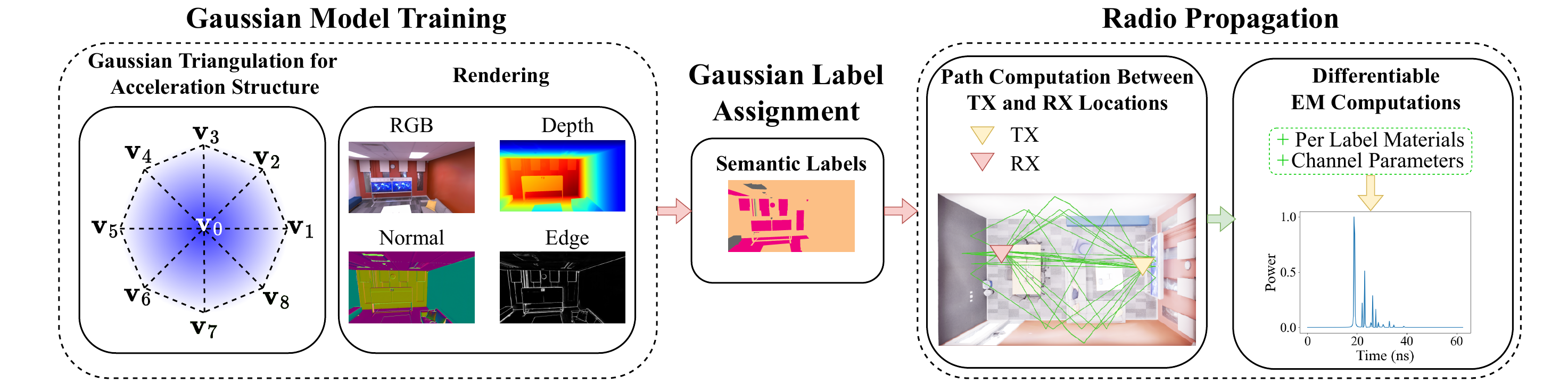
Explicit neural representations such as 3D Gaussian Splatting (3DGS) enable high-fidelity and real-time novel view synthesis, yet optimize for alpha-composited optical appearance rather than ray-intersectable geometry. In contrast, radio-frequency (RF) digital twins require deterministic multi-bounce paths, where the geometry dictates trajectories and their associated attenuation and delay. We introduce a framework enabling differentiable RF propagation simulation directly within visually reconstructed neural scenes, allowing point-to-point path computation between arbitrary 3D locations while preserving high-quality visual rendering. Unlike conventional RF simulation pipelines that rely on manually constructed meshes, we embed Gaussian primitives into a hardware-accelerated ray tracing structure as the underlying spatial representation. By extracting physically meaningful channel impulse responses from visual-only reconstructions, we provide cross-modal evidence that neural reconstructions can serve as unified spatial representations for both electromagnetic propagation simulation and photorealistic view synthesis.
Overview
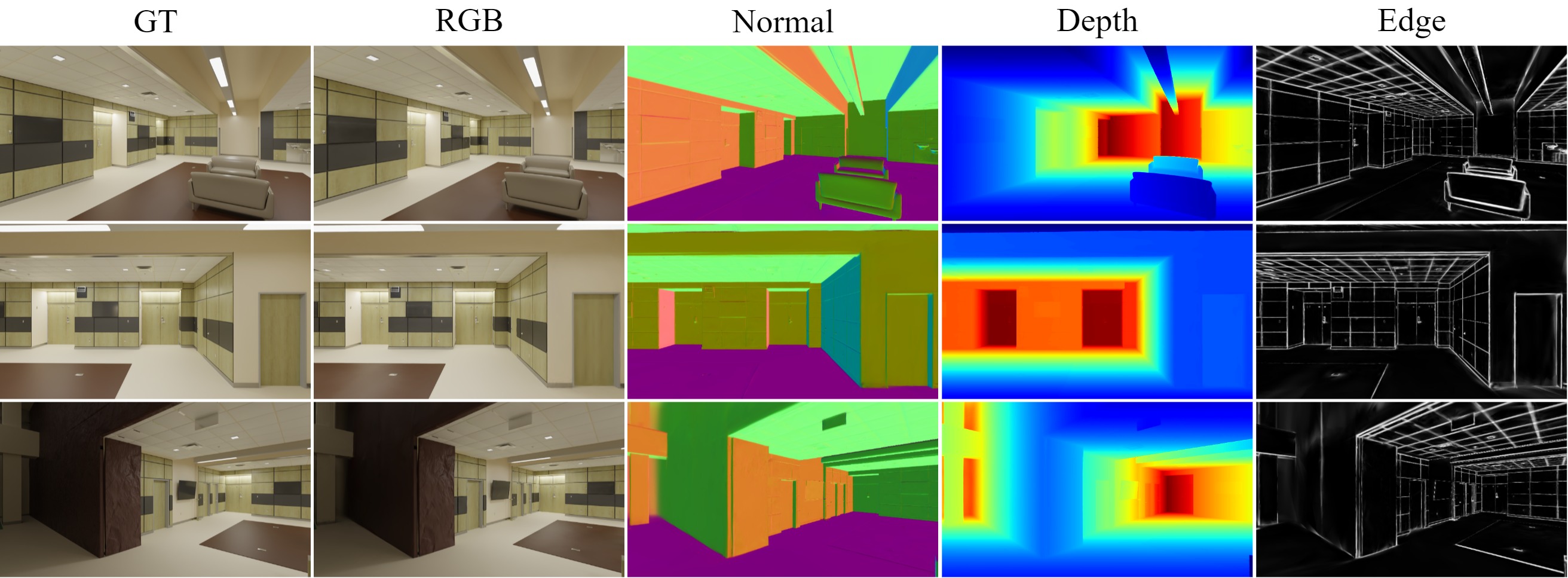
Reconstructed Scenes
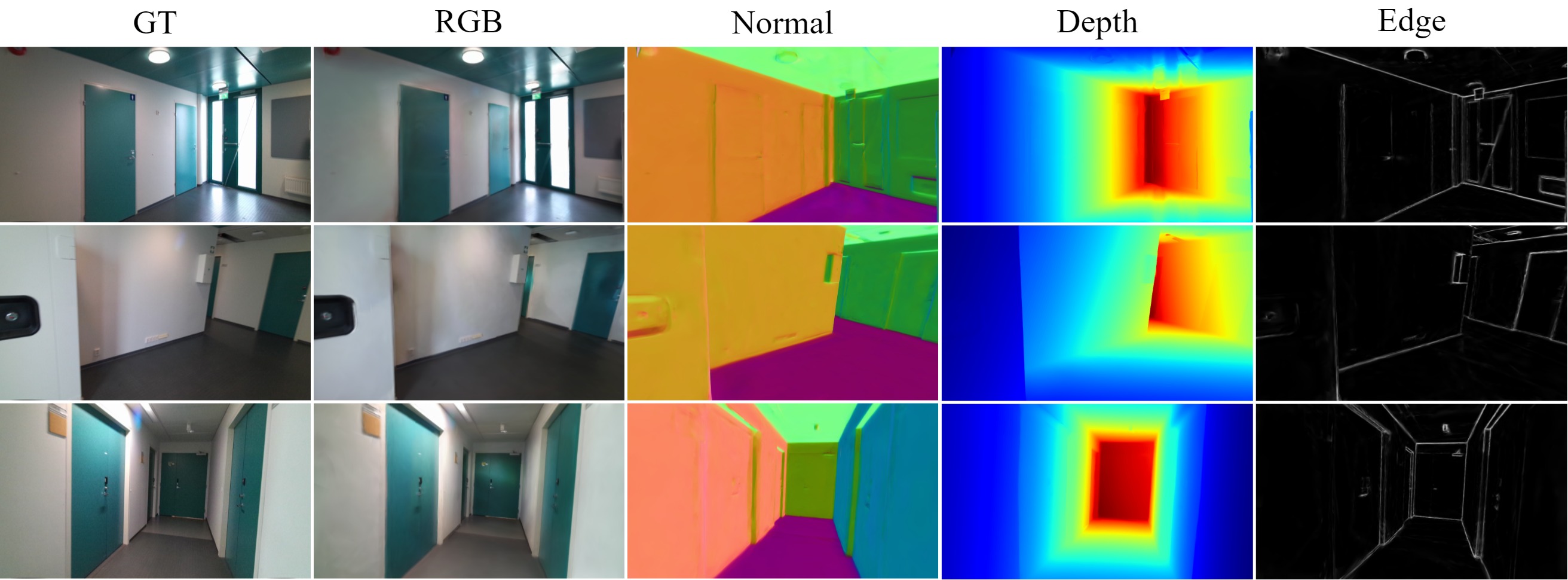
 |
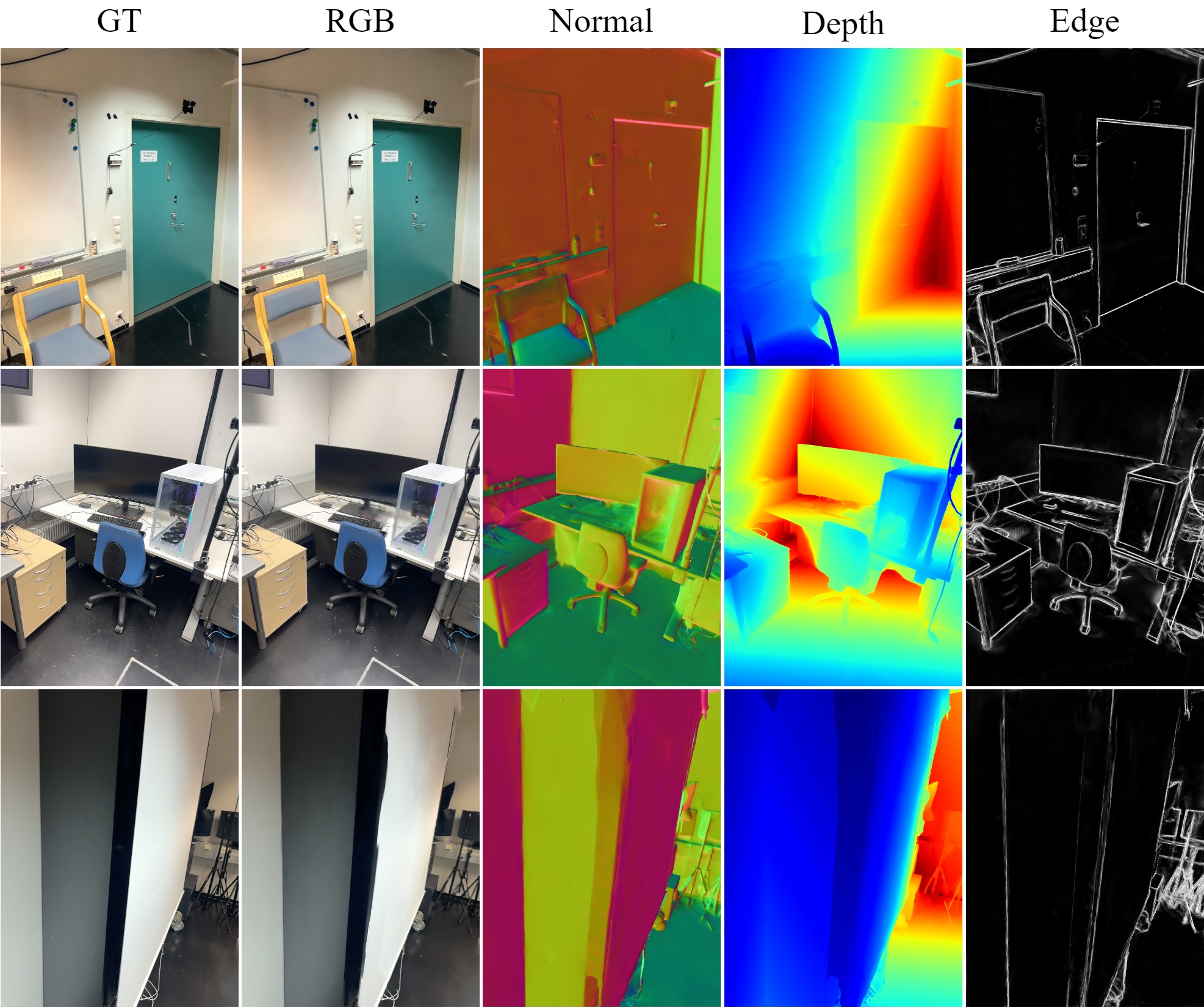
 |
 |
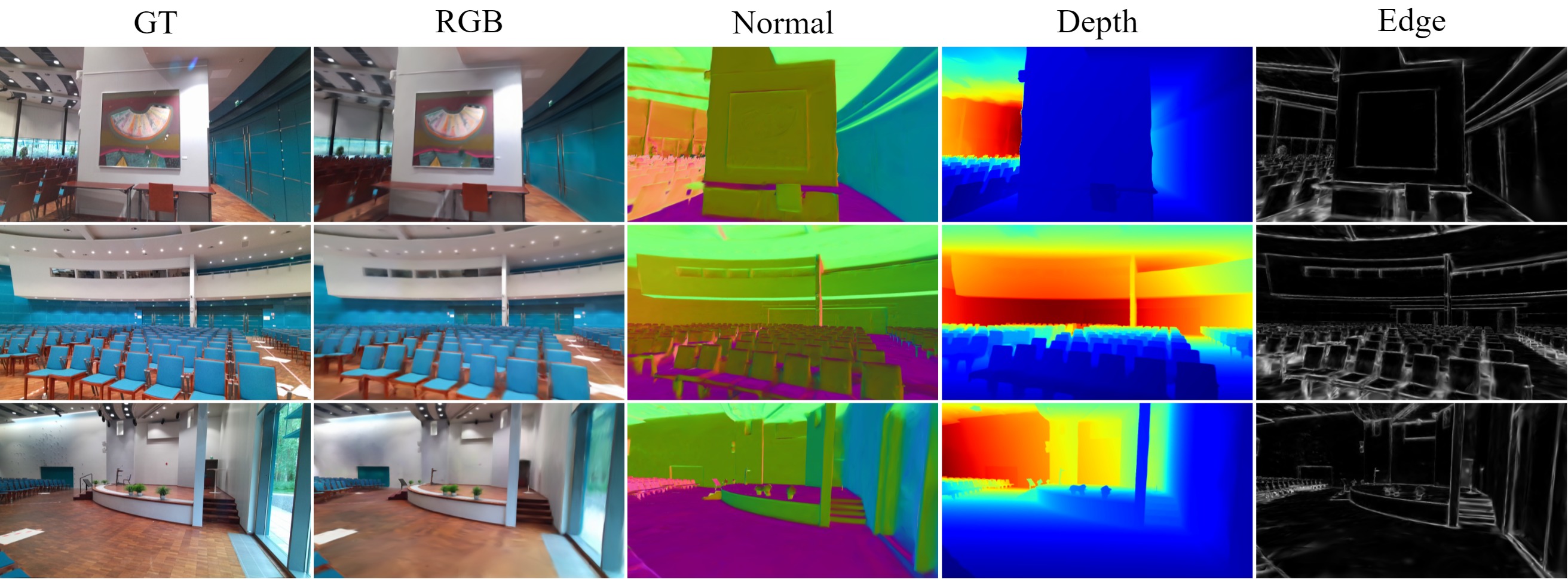 |
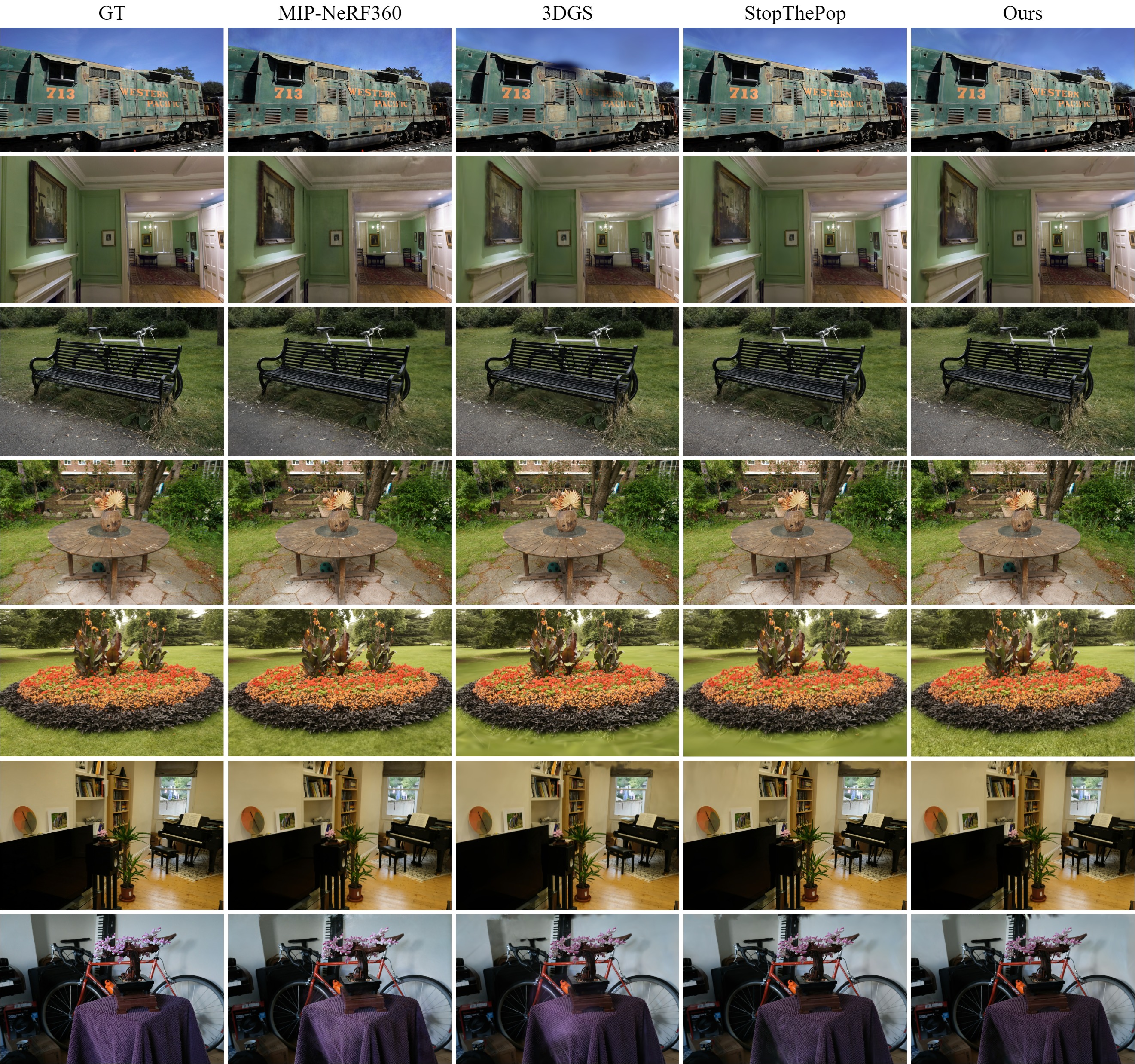
Novel View Synthesis
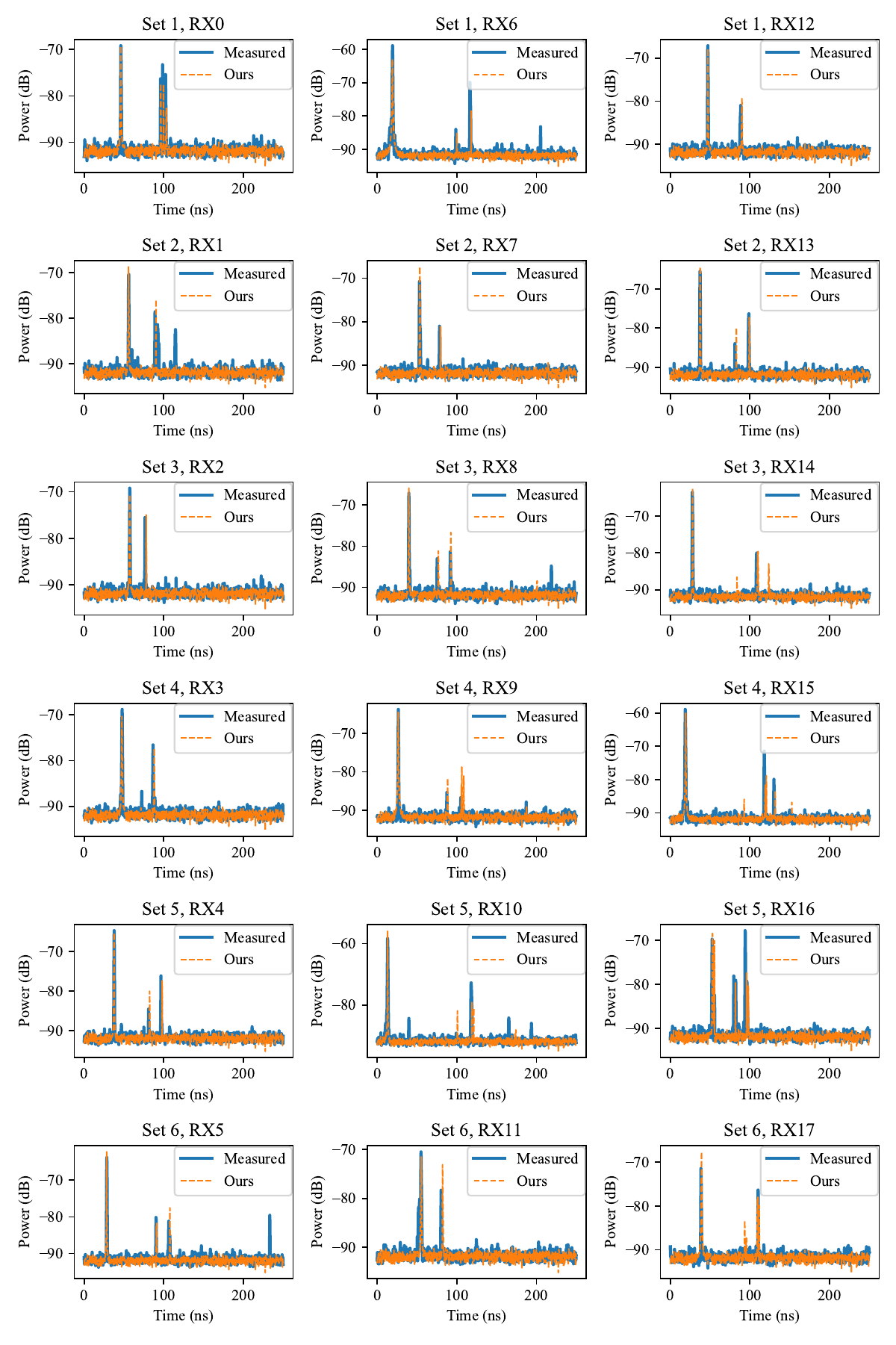
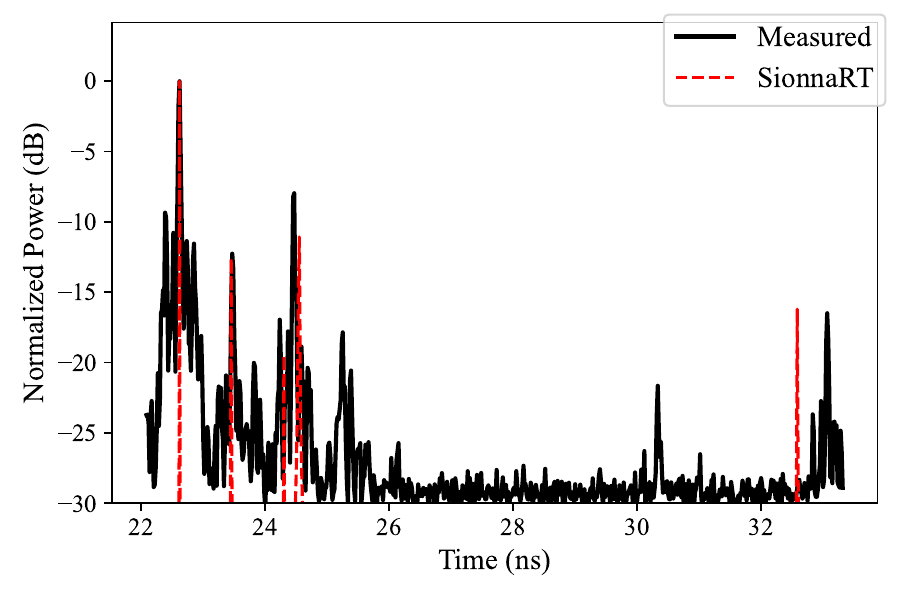
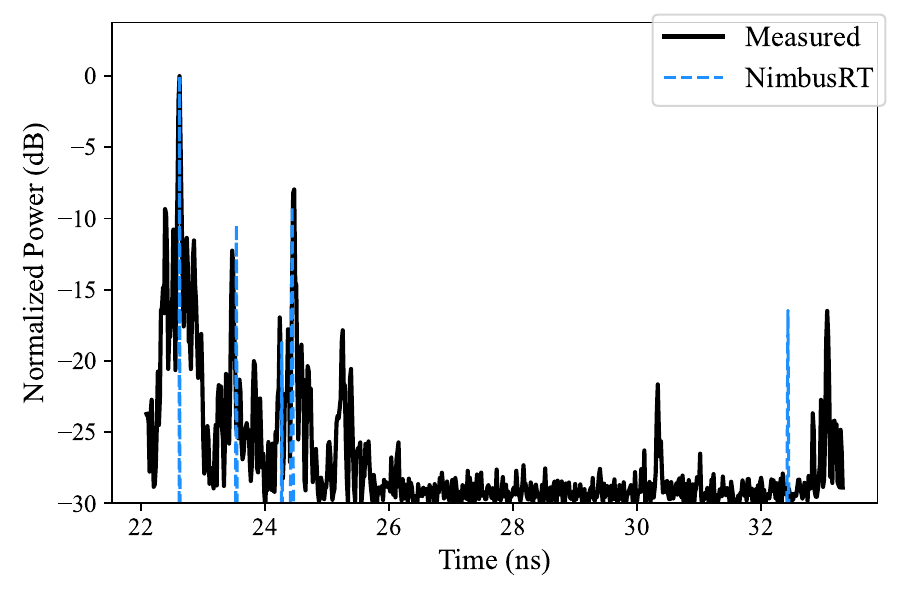
Channel Impulse Responses
Power delay profiles extracted from visually reconstructed Gaussian scenes, compared against reference simulators and measurements.
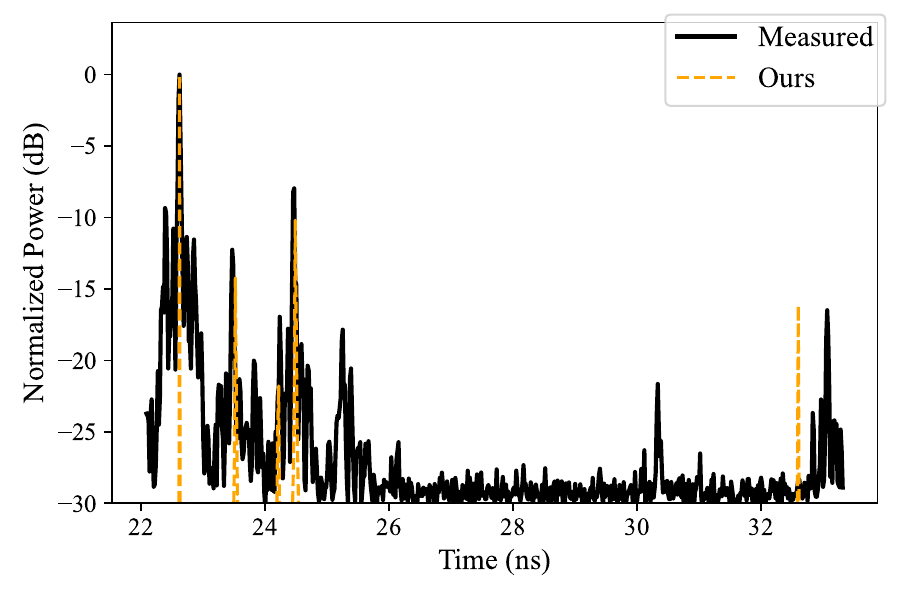 Ours |
 Sionna |
 Nimbus |
BibTeX
@article{vaara2026differentiable,
  title={Differentiable Ray Tracing with Gaussians for Unified Radio Propagation Simulation and View Synthesis},
  author={Vaara, Niklas and Huynh, Lam and Sangi, Pekka and L{\'o}pez, Miguel Bordallo and Heikkil{\"a}, Janne},
  journal={arXiv preprint arXiv:2605.07781},
  year={2026}
}